Wildlife · 3 min read
Lal Suhanra blackbuck are breeding again, but not in the wild
Ten animals from a Texas ranch in 1970 restarted a species Pakistan had lost. Fifty years on the herd survives behind a fence, and nobody has published a recent count.
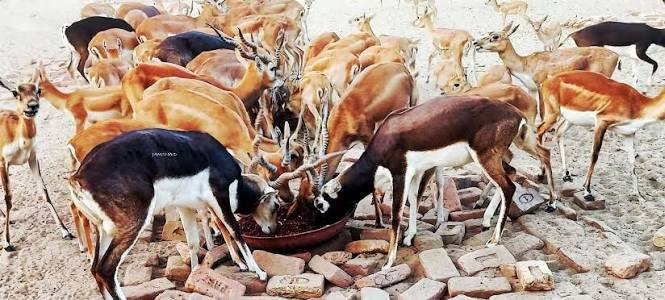
If you have stood at the enclosure fence at Lal Suhanra on a winter morning and watched a black-coated male turn his spiral horns into the light, you have seen something that should not exist in this country. Blackbuck were gone from Pakistan. What is at Lal Suhanra came back on an aeroplane.
Ten animals, April 1970
The reintroduction is well documented. A 2022 review of blackbuck across South Asia by Tahir and colleagues records that in April 1970, ten animals, seven females and three males, were brought from a ranch in Texas to Lal Suhanra, sponsored by the World Wildlife Fund and the Punjab government.
They bred. By 1982 the population had reached 48. Fresh stock was added along the way: five females and a male from Copenhagen Zoo in 1980, and a second breeding centre was set up in 1982 drawing on Copenhagen and the Western Plains Zoo in New South Wales. For a species that had been written off in Pakistan, that is a genuine conservation achievement, and it happened here.
The part that gets left out
The same review is blunt about what the recovery is and is not. Blackbuck in Pakistan are, in its words, now found in captive conditions. The 2016 IUCN assessment referenced in the review gives the species a status of Extinct in Pakistan, following an earlier classification of Extinct in the Wild after a 2003 conservation assessment workshop.
So both halves of the sentence are true at once. The animals are breeding. The species is still regionally extinct outside the fence. A herd inside an enclosure is a reservoir, not a restored population, and treating one as the other is how a conservation story quietly stops progressing.
The review is also candid that there is a lack of data about the recent population at Lal Suhanra, and it calls for updated research. We went looking for a current published count and did not find one either. The most recent hard figure we can cite in good conscience is still that 48 from 1982.
What the park has to work with
Lal Suhanra is not a small or unserious place. The Punjab Wildlife and Parks Department puts it at 162,568 acres, established in 1972, and it holds UNESCO Biosphere Reserve status. The department records around 300 bird species, 50 mammal species, 25 reptile species and over 200 species of tree and shrub inside it, with chinkara, nilgai and sambhar alongside the blackbuck.
That is the scale of habitat a free-ranging herd would need. The constraint is not land.
What stands in the way
The threats listed in the review are the ordinary ones, and they are the reason the fence is still there: hunting, poaching, habitat loss and fragmentation, disease, and road accidents. Cholistan’s wider wildlife has its own well-documented problem with illegal hunting, which is not a secret to anyone living around the park.
An enclosure protects animals from all of that. It also keeps the population small, genetically narrow and dependent on management forever. Moving from a protected herd to a wild one is not a wildlife problem. It is an enforcement and land-use problem.
What we would like to see counted
Three numbers would change this conversation, and none of them are hard to produce for an institution that already manages the park. How many blackbuck are at Lal Suhanra today. How many are in the breeding centres versus ranging inside the park proper. And how many were lost last year, and to what.
Fifty-five years ago someone thought it was worth flying ten antelope across the world to give this district its blackbuck back. The least we owe that decision is a current count.
If you work at the park or have surveyed there, and you have figures, please get in touch. We will publish them with attribution.
Sources
- Tahir R, Afzal F, Samra, Sohail AB, Abid S, Tasleem MW, “Population Status, Distribution Threats and Conservation of the Blackbuck Antilope cervicapra in South Asia: An Updated Literature Review”, 2022. Read the review
- Lal Suhanra National Park, Punjab Wildlife and Parks Department. Park page
This piece is desk research from published sources, not EcoBahawalpur field data. Where we have our own readings we say so.